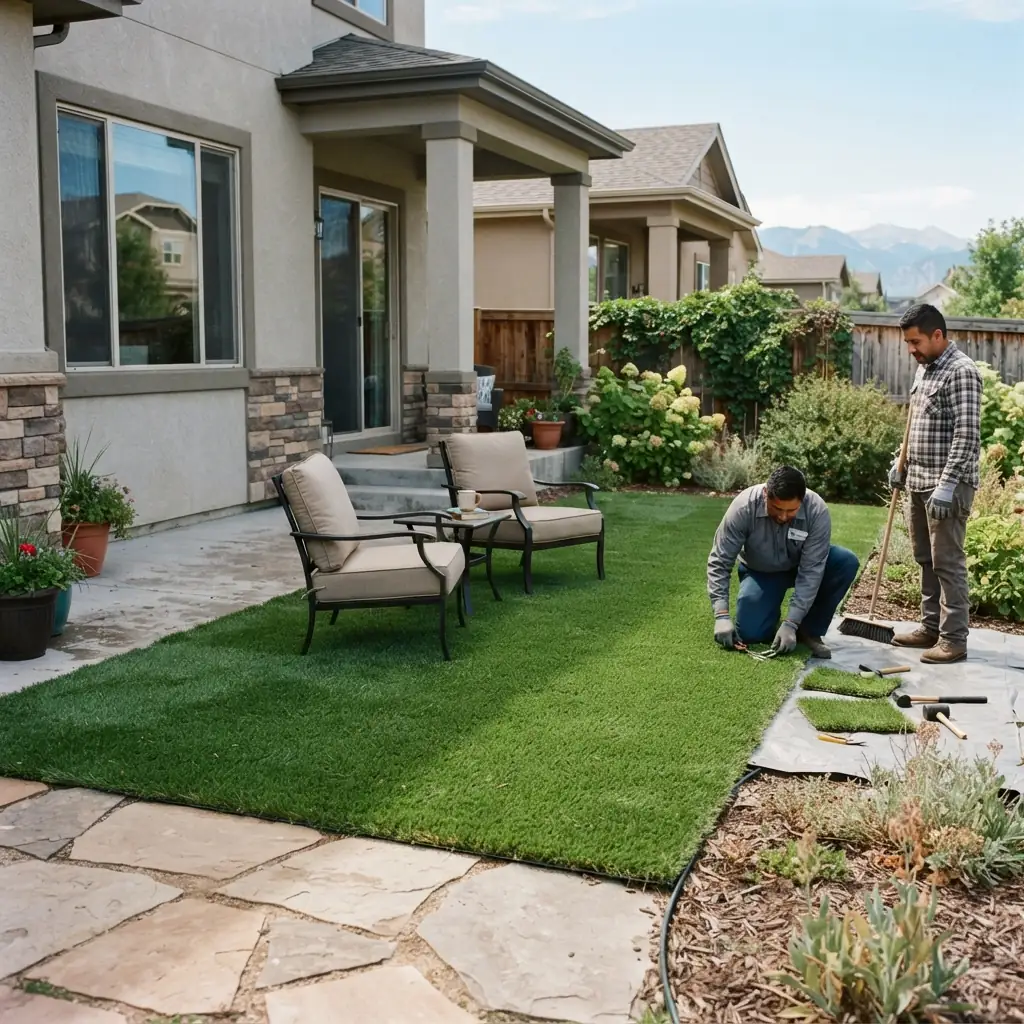
Bare concrete tends to feel hard underfoot and heats up in the sun. Laying artificial grass over it softens the patio for kids, pets and furniture, and the slab stays where it is. Here is how it works: we introduce Westminster homeowners to an independent local turf provider who installs turf on concrete.
Checking the Slab First
Step one is looking at the slab, because turf mirrors whatever sits under it. Wide cracks, lifted sections and low spots where water collects will show through the finished surface. A provider checks for those and may recommend grinding, patching or a leveling compound before anything else.
Next, they note how the slab sheds water. Most patios tilt slightly away from the house, and the turf system has to leave that route open so rain and snowmelt can still drain off.
Padding and Drainage
A foam underlay comes next, giving the surface a lawn like give instead of a sidewalk feel. Some pads have grooves on the bottom that guide water to the slab's edge. Skip the pad, and turf on concrete can feel thin and stay damp below.
Expect a lighter dose of infill on concrete. The provider suggests just enough to keep blades upright without it washing off the sides.
Securing the Edges
To hold it in place, turf on concrete is usually fixed with outdoor adhesive or heavy duty tape along the perimeter and seams. Where the patio meets a lawn or planting bed, the edge gets tucked or finished with trim. Steps and thresholds call for precise cuts so nobody trips.
Leave clearance at doors so they still swing open once the pad and turf are down.
Starting a Turf Over Concrete Project
Send the patio or slab size, a quick note on its condition and how you want to use it. Then we pass everything to an independent local turf provider serving Westminster, who visits and prepares a quote.