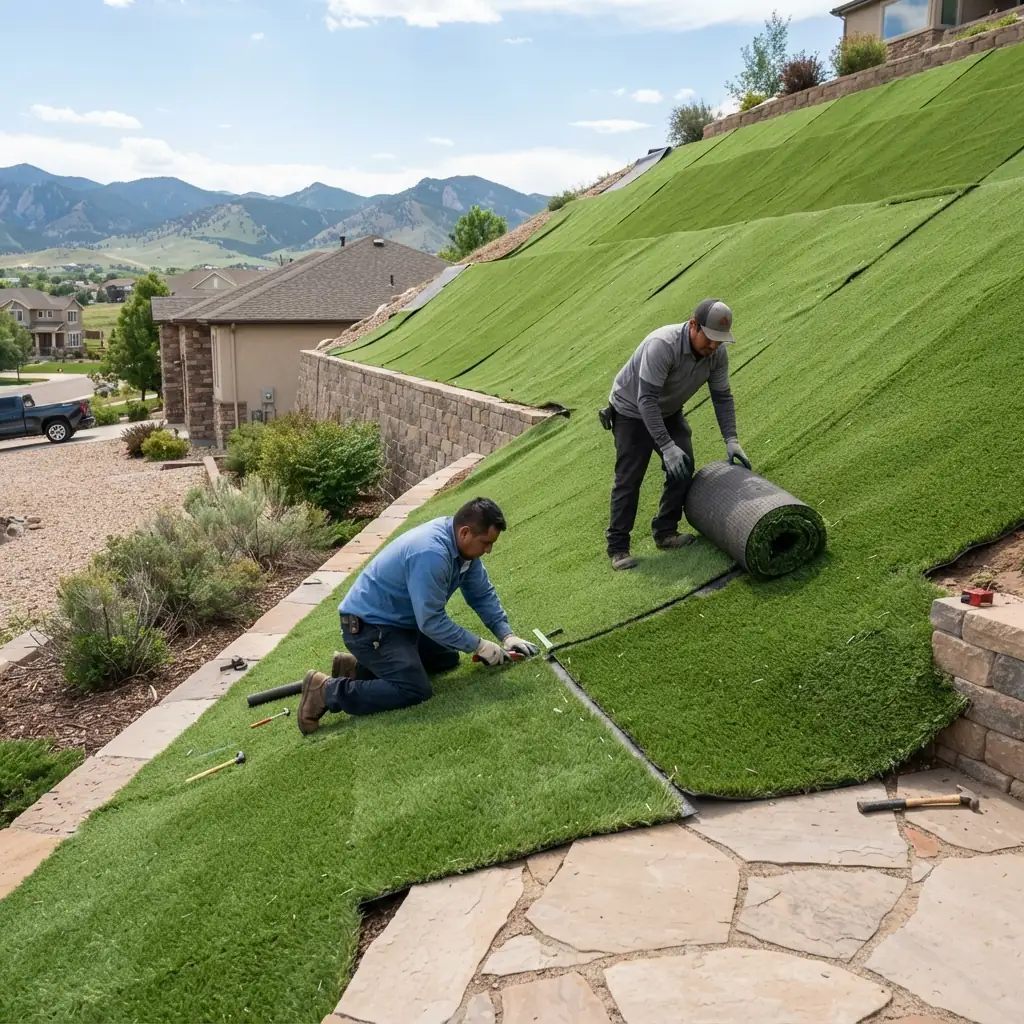
Slopes are among the toughest spots to keep green. Mowing them is awkward, sprinkler water runs off before it soaks in and bare soil washes away. Installed with the slope in mind, turf can fix all three. Here is how it works: we introduce Westminster homeowners to an independent local turf provider who takes on sloped yards.
Assessing the Slope
Step one is sizing up the slope: how steep it is, what the soil is like and where storm water comes from. Gentle to moderate slopes can usually take turf as is. Steeper ground may need terracing, a retaining wall or another approach for part of it.
The provider also works out how equipment and materials will get up the slope, since base rock and turf rolls are heavy to carry uphill.
Base and Anchoring
Next comes the base, compacted in layers and sometimes built with a slightly coarser rock that interlocks. Turf is fastened more heavily than on level ground, with extra fasteners on the top edge and tighter spacing across the slope's face.
Seams typically run up and down the hill instead of across it, so water does not catch on them.
Managing Runoff
Water picks up speed on a slope. The provider may add a drain or gravel channel at the bottom, reroute downspouts or shape the top edge so water moves around the turf rather than beneath it. Those details protect the base in heavy rain and snowmelt.
Steep sections may get lighter infill to limit washout, with heavier infill on the flatter parts.
Starting a Slope Turf Plan
Send a description or photo of the slope, its rough size and how water moves across it. Then we pass your request to an independent local turf provider serving Westminster, who visits and quotes the project.