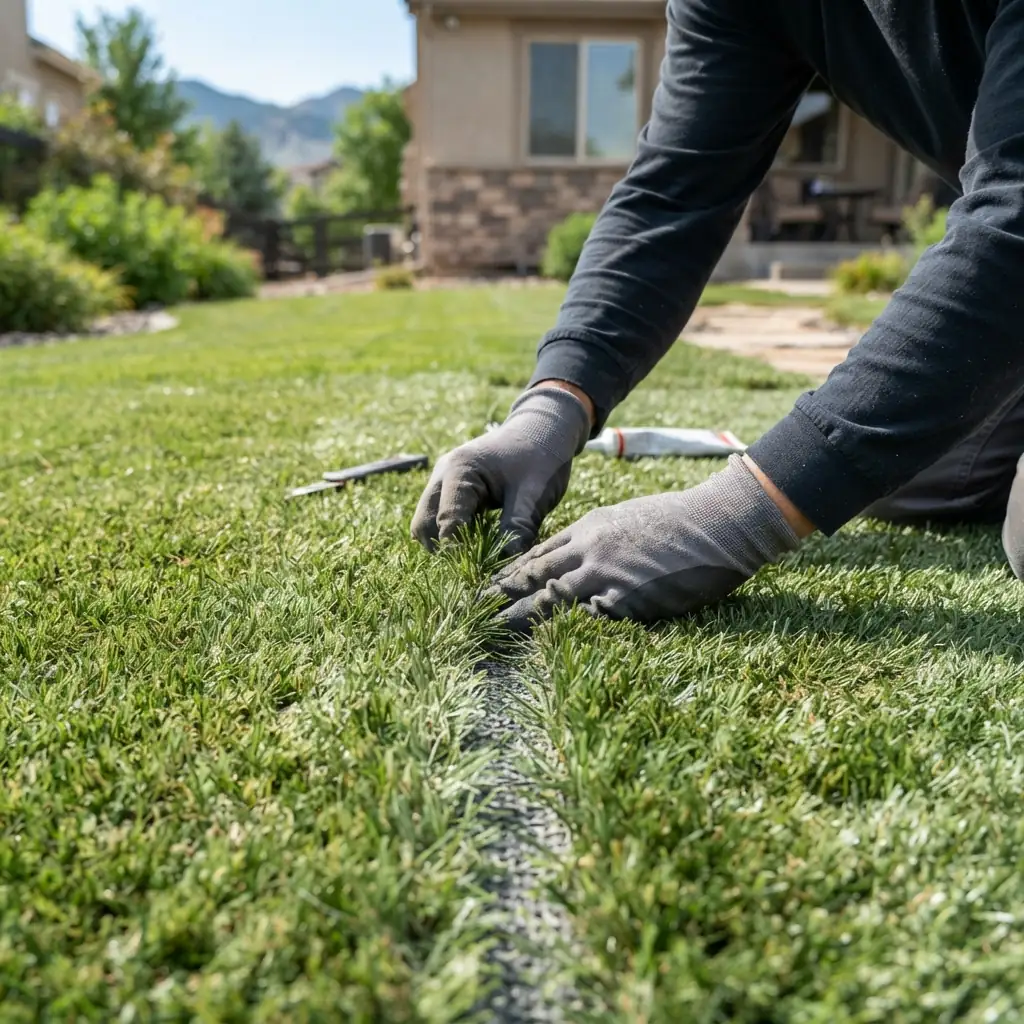
Even well made turf gets damaged once in a while. A dog paws at a corner, a grill drips hot grease or a seam starts lifting after a few seasons. Most of these issues can be fixed. Here is how it works: we introduce Westminster homeowners to an independent local turf provider who repairs synthetic lawns.
Common Turf Repairs
Seams top the list. When the adhesive or tape gives out, the edges can pull apart or curl up. Tears from pets, furniture or sharp objects come next, along with melted spots from fire pits or grills. Edges along beds and walks can lift when fasteners work loose.
Flattened traffic paths are not real damage, but they make a lawn look tired. Power brushing plus fresh infill usually revives them.
Step by Step: How Repairs Get Done
For a seam, the provider folds back both sides, cleans the backing, lays fresh seam tape and adhesive and presses the edges together. For tears and burns, the damaged piece is cut out and a patch of matching turf is set in with the blades running the same way.
Then infill is brushed in so the repair blends with the lawn around it. If you saved leftover turf from the original install, it makes ideal patch material.
Repair or Replace?
Repairing makes sense when the rest of the turf is in good condition. If the fibers have turned brittle, the backing is breaking down or many areas are failing, replacing it may be smarter over the long run. The provider can assess the overall state and explain both paths.
Catching small problems early stops them from spreading and protects the base underneath.
Starting a Turf Repair Request
Let us know what is damaged, about how big the area is and, if you know it, when the turf went in. Photos are useful. Next, we pass the details to an independent local turf provider serving Westminster, who confirms and quotes the repair.