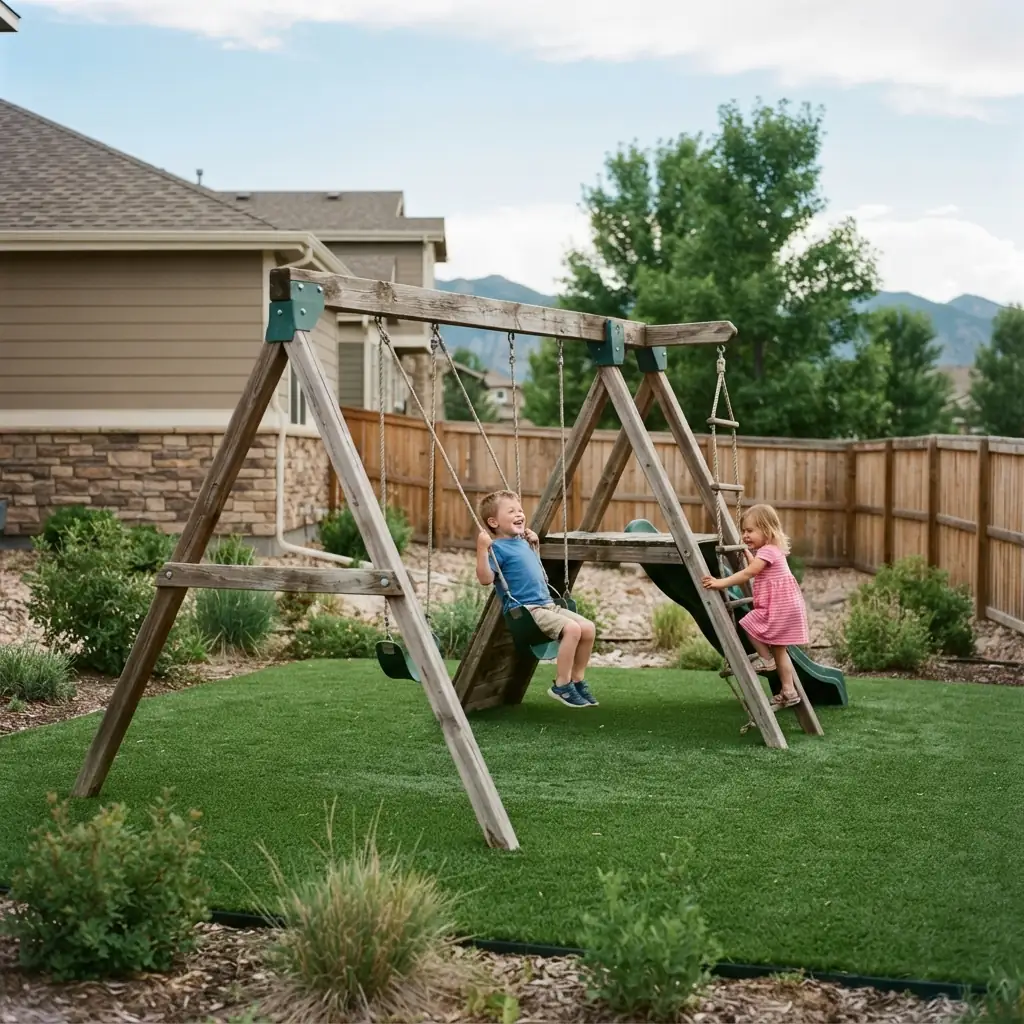
Plenty of Westminster families stop fighting grass in the busiest corner of the yard. Swing sets, trampolines and lawn games grind a patch down to dirt, and that dirt turns to mud after each storm. Astroturf, the name many people give any synthetic grass, fixes that with a surface that looks the same in August as in May. Here is how it works: we connect you with an independent local provider who installs play area turf and can explain padding, drainage and heat.
Step One: Choosing a Good Play Surface
A play yard demands more from turf than a front lawn. Kids run, slide and tumble, so the surface has to be soft, even and free of hard edges. Most play installs pair a shorter, dense turf with a foam or rubber pad beneath it where falls happen, like under swings or at the end of a slide.
The turf matters as well. Look for blades that bounce back after being stepped on, a backing with lots of drainage holes and infill that will not track indoors. The provider can bring samples so you can compare a soft landscape turf with a tougher sports style product before choosing.
Step Two: Building the Base
The hidden part of the job decides how well the play area holds up. The crew strips the existing grass and a few inches of soil, then builds a crushed rock base that is graded and compacted. That base sends rain and snowmelt downward instead of letting it sit on top, and gives the turf a firm, level bed that will not ripple or dip.
Edges get fastened along a border like a paver strip, bender board or the patio edge. Where a swing set or playhouse sits on the turf, the crew plans cutouts and anchors so the equipment stays steady and the turf lies flat around every post.
Step Three: Heat, Cleaning and Daily Care
Synthetic turf can warm up in direct afternoon sun, so plan for it in a play yard. Lighter colored infills, shade from a sail or tree and a quick hose rinse before playtime all help. The provider can point out which products run cooler and where shade would help most in your layout.
Daily care is easy. Gather leaves and toys, rinse off spills and brush the blades now and then so they stay upright. Once or twice a year, check the edges and add infill in the high traffic lanes. Mowing, fertilizing and reseeding bare spots are off the list.
Getting Your Play Area Plan Started
Before you call, sketch the play zone, mark where equipment sits and note any spots that stay wet. That gives the provider a head start at the visit. Next, we introduce Westminster households to an independent local turf provider, and the estimate is between you and them. Tell us a bit about the space and we will pass it on.