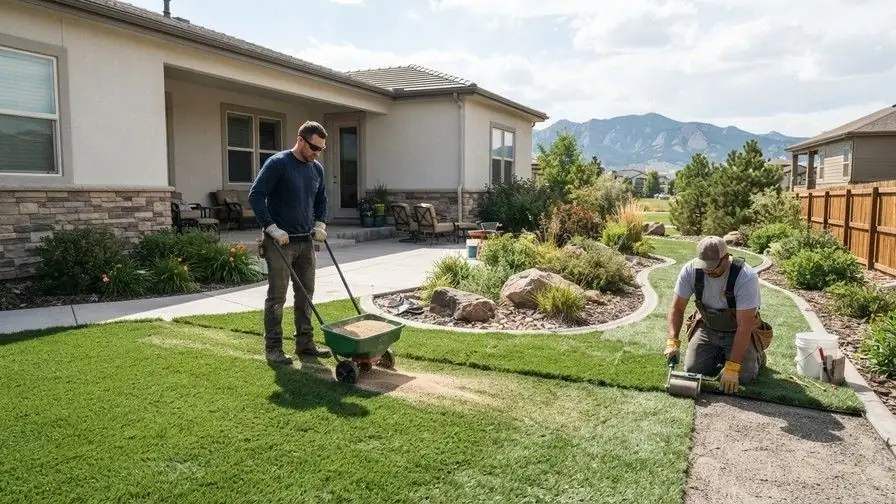
Infill is easy to forget, yet it shapes how turf feels, drains and copes with pets and heat. Here is a step by step look at the common infill types for Westminster homeowners.
Which turf infill is right for my yard?
The right turf infill depends on how your yard gets used. For lightly used lawns, silica sand is the budget friendly pick. For pets, coated sand is popular because it resists clumping and bacteria. For play areas and sunny patios, specialty infills, including organic and cooling options, fit well. The turf product counts too, since some are built for one infill type and depth. A provider can suggest a type and amount based on how the space is used.
Silica Sand
Option one is silica sand, the most widely used infill. It is heavy enough to keep turf in place and costs less than the alternatives. It suits lawns with light foot traffic and no pets.
Its rough grains can hold odor in pet areas, and it can feel warm in direct sun, so some homeowners upgrade.
Coated Sand
Option two is coated sand, which has a smooth acrylic or polymer coating that helps it drain and resist bacteria. Lots of pet owners choose it because it rinses clean more easily, though it usually costs more per bag than silica sand.
Some coated sands come tinted green so they blend with the blades if the surface gets disturbed.
Option Three: Specialty and Cooling Infills
Organic infills made from plant materials, plus cooling infills that hold a bit of moisture, can make turf more comfortable in full sun. They show up often in play areas and next to patios.
These may need topping up more often, so ask how frequently your yard would need a refresh.
Making the Final Choice
Pets, play, sun and the turf product all point toward the right infill. If you want your current infill checked or refreshed, the next step is an introduction to an independent local turf provider serving Westminster.