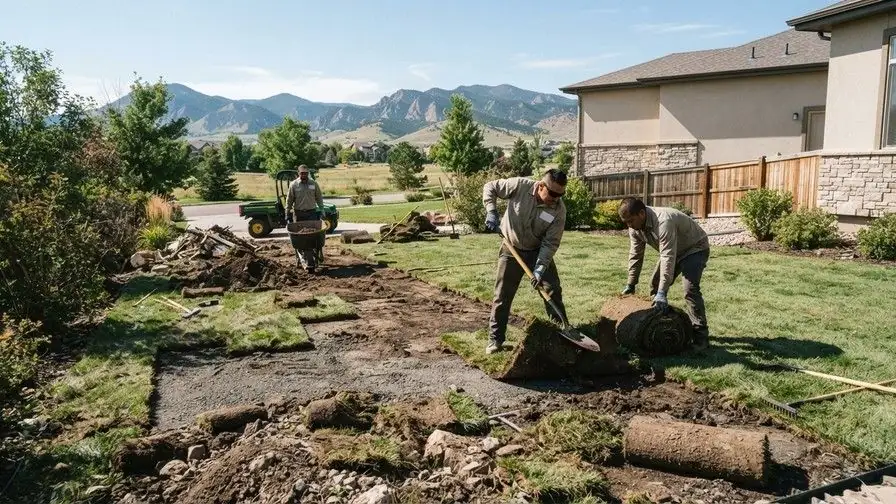
Pulling out old turf is more work than it appears, mostly because turf and infill together weigh so much. Here is what Westminster homeowners can expect, one step at a time.
How is old artificial turf removed?
Old artificial turf is removed in a set order. First, fasteners come out and the turf is cut into strips. Next, the strips are rolled and hauled off, with as much infill recovered as practical. Then the base is inspected. A sound base can often be refreshed and reused under new turf, which saves on digging, but if you are switching to plants or pavers it may need to come out too. Ask for a quote that covers removal plus the next step so nothing slips through.
Preparing for Removal
Step one is prep. Move furniture, toys and planters off the turf, flag any sprinkler heads or lines you want to keep and pick a spot for staging rolls, usually the driveway or street.
Give neighbors a heads up if a trailer or truck will be parked nearby.
The Removal Process
Step two is the removal itself. Fasteners are pulled, then the turf is cut into strips that can be handled and rolled. Some infill falls out as it rolls, and the rest stays inside. Edging and bender board come out too unless you want them kept.
The rolls are loaded up and taken to a disposal or recycling site.
What Comes Next
Step three is deciding what is next. With the turf gone, you can reuse the base for new turf, regrade for a different landscape or dig it out for garden beds. Reusing a sound base is often the most budget friendly way to new turf.
Get a quote that covers removal and whatever comes after, so nothing gets overlooked.
A Fresh Start
Clearing out old turf sets up a refreshed yard. The next step is an introduction to an independent local turf provider serving Westminster for removal and whatever comes after.