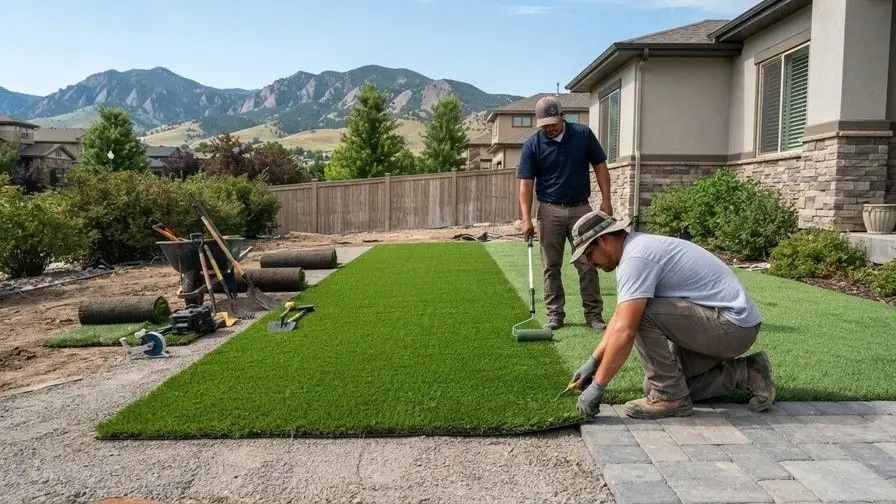
Lots of Westminster dog owners like the idea of a green yard free of mud and yellow spots. Pet turf can get you there, but it works best when it is planned around dogs from day one. Work through these basics step by step to ask the right questions and keep your turf fresh.
What do dog owners need to know about pet turf?
Dog owners need to know that good pet turf comes down to three parts: a backing that drains fast, a free draining base and an odor control infill such as zeolite. Here is the daily routine: scoop solid waste and hose down the potty area, more often in hot weather. An enzyme cleaner takes care of smells that linger. A local provider can suggest a layout that fits your dogs and your yard.
Drainage Comes First
Step one is drainage, the single most important feature of pet turf. Look for a fully permeable backing or one with lots of drainage holes. Below it, the base should be built so water drains away fast rather than sitting just under the surface.
If your dog has a go to spot, make sure it gets the best drainage in the plan. Some yards do well with a dedicated potty area on a slightly deeper base, which keeps the rest of the turf cleaner.
Step Two: Choose an Infill That Helps
Infill does more than hold turf down. In pet areas, it can help control odor. Zeolite, a natural mineral, traps ammonia from urine and lets it go when rinsed, and other pet focused infills rely on coatings that resist bacteria.
Ask which infill the provider uses for dogs and how often it needs a top up. In busy spots, refreshing once or twice a year keeps odor under control. Steer clear of infills your dog seems eager to eat, and mention any chewing habits at the visit.
Step Three: Set Up a Cleaning Routine
Scoop solid waste promptly, the same as on grass. Hose the potty area regularly, and more often in hot spells when odor builds quicker. A turf enzyme cleaner breaks down whatever residue the hose misses.
Every few weeks, rinse the whole area thoroughly and brush the fibers upright. Check edges and seams where dogs dig or scratch, since catching a loose edge early keeps a small fix from growing into a bigger repair.
A Cleaner Yard for Your Dogs
Pet turf performs well when drainage, infill and cleaning are planned as one. If you are ready for a cleaner dog yard, the next step is an introduction to an independent local provider in Westminster who installs pet turf and dog runs.