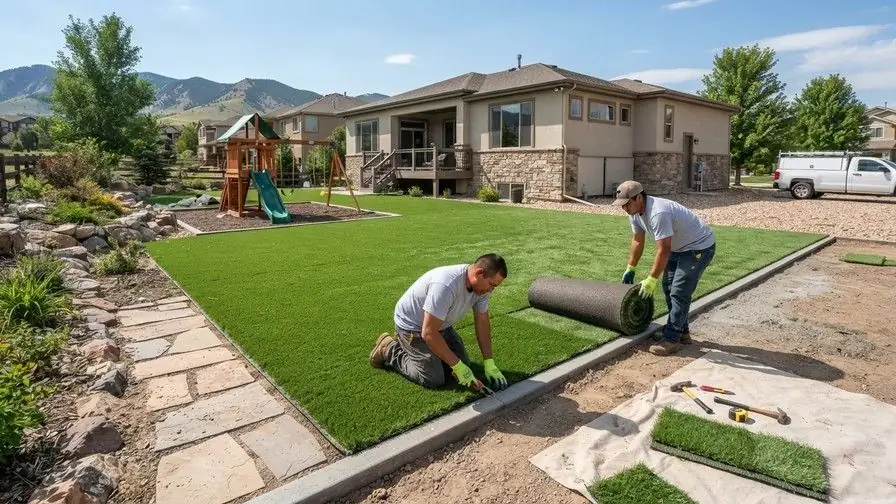
A play yard sees more action than nearly any other part of a property, so it is often the first spot Westminster families think about for turf. Before calling anyone, it pays to think through how the space gets used. This checklist goes step by step through the questions that matter most for how a play area feels and lasts.
What should I check before putting astroturf in a play yard?
Before putting astroturf in a play yard, check four things in order: fall zones, drainage, heat and edges. First, plan a foam pad beneath swings, slides and climbers. Second, make sure the base drains so the yard dries out after storms. Third, think about afternoon sun and how you will cool the surface. Fourth, confirm how the turf will be fastened at the borders so kids cannot trip on a lifted edge. A local provider can cover each point at the estimate visit.
Step One: Map the Fall Zones
Walk the play space and mark every place a child could fall: below swings, at the end of a slide, around a climbing frame and next to a trampoline. That is where padding goes. Foam or rubber pads sit beneath the turf and soften the surface without changing how it looks.
Measure how tall each piece of equipment is, since taller pieces generally need a thicker pad. If you might move or add equipment later, say so now so the padding covers the future layout. Adding pads during install is far easier than lifting turf afterward.
Step Two: Plan for Storms and Snowmelt
The dirt under a swing set turns to mud because water has no way out. Turf solves that only if the base drains. Ask how deep the crushed rock base will be and which direction the yard will slope, so water moves away from the house rather than pooling in the middle of the play area.
Check the downspouts and where snow slides off the roof, since those spots dump a lot of water at once. A provider might suggest extending a downspout, adding a gravel strip or tweaking the grade so the play space stays usable after a storm.
Step Three: Account for Summer Heat
Synthetic turf heats up in strong sun, and kids often play in the afternoon when the sun is highest. Shade from a tree, sail or pergola makes a big difference, and so does a quick hose spray before kids run outside.
Infill matters as well. Some infills are made to stay cooler than plain sand or rubber, and lighter colored products reflect more heat. Ask the provider what they use in play yards and whether they can show a sample that has been sitting out in the sun.
A Quick Recap
To recap: pad the fall zones, confirm the base drains, plan for heat and check how the edges are fastened. Cover those four steps, and a turf play yard can stay clean and even through years of games. When you are ready, the next step is an introduction to an independent local provider in Westminster.